A Decade in the Wardrobe: Which Menswear Investments Actually Deliver

Photo: Jones, Erasmus, Public domain, via Wikimedia Commons
The promise is made constantly, across every price point and every platform: this piece is an investment. Buy it now, the logic goes, and it will serve you for years—decades, even—repaying its cost many times over through longevity, versatility, and enduring style.
Sometimes the promise is kept. More often, it is not.
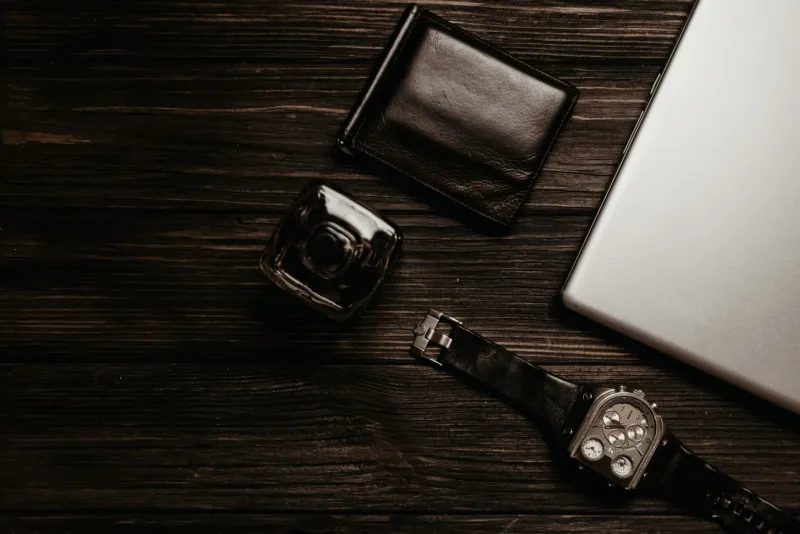
After ten years, the honest accounting is rarely flattering to the garments that generated the most excitement at the time of purchase. The statement outerwear has dated. The limited-edition sneakers have degraded. The "investment" watch from a brand whose prestige rested on marketing rather than movement has depreciated in both value and regard.
What remains—what actually performs across a decade—is a narrower category than the industry would prefer to admit. Understanding that category requires setting aside the language of aspiration and applying a more rigorous standard: not what sounds compelling at the point of sale, but what a man is genuinely glad he purchased when he looks back from ten years on.
The Single-Breasted Suit in Wool Flannel
Of all the garments a man might purchase, the well-made single-breasted suit in a mid-weight wool flannel has the strongest claim to genuine investment status. The reasons are multiple and mutually reinforcing.
First, the silhouette. The single-breasted suit—two or three buttons, notch or moderate peak lapel, clean chest—occupies a position so close to the center of menswear's sartorial grammar that it cannot be made to look dated by the ordinary movements of fashion. It has been worn by the most elegantly dressed American men for the better part of a century, and there is no plausible scenario in which it becomes inappropriate.
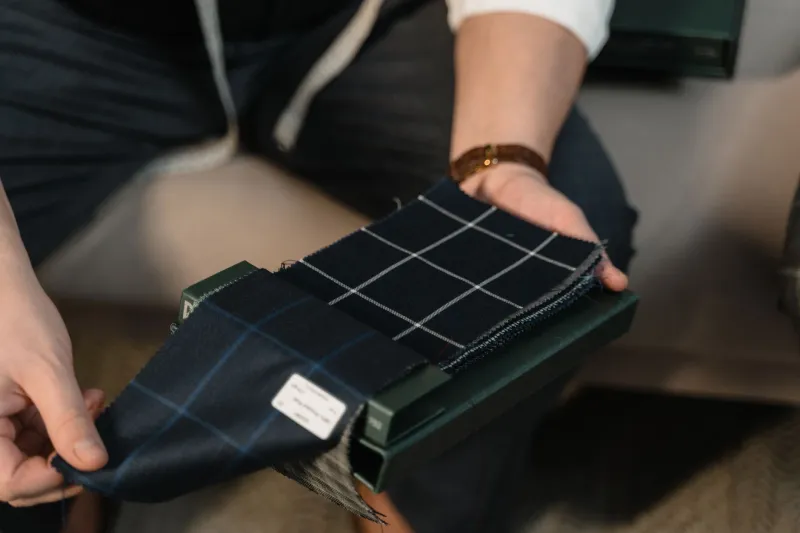
Second, the fabric. Mid-weight wool flannel—typically between ten and fourteen ounces—improves with wear in a way that most textiles do not. The fibers soften. The cloth acquires a subtle drape that no amount of pressing can manufacture in a new garment. A flannel suit at year ten, properly maintained, looks richer and more settled than it did when it left the tailor's shop.
Third, the repairability. A quality wool suit can be relined, re-canvassed if necessary, and let out or taken in within the limits of its construction. It can absorb a decade's worth of minor alterations and emerge with its essential character intact.
The caveat: the suit must have been made to a standard that justifies this expectation. Fused construction, synthetic blend fabrics, and machine-sewn buttonholes do not improve with age. They simply deteriorate more slowly than fast fashion. The suit worth calling an investment is one built on a full canvas, in a pure or near-pure natural fiber, by hands that understood what they were making.
Welted Leather Footwear
The Goodyear-welted shoe is perhaps the clearest example of genuine investment value in menswear, and it is also the category where the ten-year argument is easiest to make to a skeptic.
The mechanism is straightforward: because the upper is attached to the sole via a welt—a strip of leather stitched to both—rather than glued directly, the sole can be replaced when it wears through while the upper remains intact. A quality calf leather upper, properly maintained with regular conditioning and cedar shoe trees, does not wear out. It patinates. The surface develops a depth and character that is genuinely impossible to replicate on a new shoe.
At year ten, a well-maintained Oxford or Derby from a reputable maker—the American market offers several excellent domestic and English options—will have been resoled at least once, will fit its owner's foot with a precision that only years of wear can produce, and will look, to the educated eye, considerably more interesting than it did when new.
The economics, applied honestly, are compelling. A pair of welted shoes at four hundred to six hundred dollars, maintained with perhaps fifty dollars in annual care costs and a resole every few years, delivers a cost-per-wear that no fast-fashion footwear can approach.
Fine Knitwear in Natural Fiber
A well-made crewneck or V-neck sweater in a quality natural fiber—Scottish cashmere, merino wool, or a considered blend of the two—belongs in this conversation, with an important qualification: the fiber weight and construction must be substantial enough to resist the pilling and thinning that afflicts thinner, cheaper iterations of the same category.
Heavy-gauge cashmere and mid-weight merino, properly laundered and stored, do not degrade meaningfully over a decade. They may require occasional depilling—a few minutes with a cashmere comb twice a season—but the fabric itself remains sound. Colors in the classic range (navy, charcoal, camel, oatmeal) do not date. The silhouette of a well-proportioned pullover is essentially immune to fashion's movements.
The failure mode in this category is almost always the purchase of something too thin, too fashion-forward in color or detail, or from a brand whose "luxury" positioning rests on marketing rather than fiber quality. These pieces do not survive a decade with dignity.
What Disappoints: A Candid Assessment
Honesty requires naming the categories that frequently fail to deliver on their investment promise.
Outerwear with strong seasonal silhouettes. The overcoat in a classic cut—straight body, notch lapel, natural shoulder—holds up across years. The overcoat designed to reflect a particular moment's exaggerated proportions dates precisely as quickly as the moment that produced it.
Leather goods from aspirational brands. Not all leather goods are created equal, and the premium commanded by certain logos reflects marketing expenditure rather than leather quality or construction. A wallet or belt from a brand whose reputation rests on its monogram rather than its craft will not improve with age. It will simply become an older version of an expensive object.
Accessories built around trend rather than function. The pocket square in a novelty print, the tie in a color that was briefly fashionable, the lapel pin that referenced a specific cultural moment—these are pleasures of the present, not investments in the future.
The Framework, Stated Plainly
A genuine investment piece satisfies three criteria simultaneously: it is made from a material that improves or holds its quality with age; it occupies a position in the sartorial vocabulary that is not dependent on any particular moment's aesthetic preferences; and it can be maintained, repaired, or altered without compromising its essential character.
Applied honestly, this framework eliminates most of what is sold as investment-worthy and clarifies the relatively small category of purchases that genuinely deserve the term. The man who confines his significant expenditures to that category will find, at the ten-year mark, that his wardrobe has done what wardrobes rarely do: it has gotten better.