Earned Over Time: The Living Biography of a Well-Worn Wardrobe
There is a particular kind of beauty that cannot be purchased outright. It arrives slowly, incrementally, through the accumulated pressure of daily life—through rainstorms navigated and boardrooms entered, through seasons of wear and seasons of rest. It is the beauty of patina: that luminous, layered quality that separates a garment merely owned from one genuinely lived in.
In an era that prizes novelty above almost everything else, this is a quietly radical idea. The menswear industry is structured, largely, around obsolescence—around the proposition that what is new is what is desirable. But the most discerning American dressers have long understood something different: that the finest garments are not finished when they leave the atelier or the workshop. They are, in a meaningful sense, just beginning.
What Patina Actually Is
The word itself comes from the Latin for a shallow dish, later adopted to describe the green oxidation that forms on aged bronze. In the context of menswear, it refers to something more nuanced: the visible record of a material's interaction with time, use, and the body that wears it.
Patina is not deterioration. The distinction matters enormously. Deterioration is the result of neglect—a sole worn through, a collar frayed from inattention, a lining split from deferred maintenance. Patina, by contrast, is the product of engagement. It requires care, regular use, and an understanding of what a material needs in order to age well rather than simply age.
The science beneath this aesthetic phenomenon is worth understanding. Natural materials—full-grain leather, high-twist wool, linen, shell cordovan—are porous and responsive in ways that synthetic fibers simply cannot replicate. They breathe, they absorb, they adapt. Over time, the oils from the wearer's hands condition leather from within. The lanolin in quality wool redistributes with body heat, allowing fibers to settle into the wearer's specific posture and movement. These are not accidents. They are features, built into the material at the molecular level, awaiting activation through use.
The Leather That Earns Its Glow
Perhaps nowhere in menswear is the principle of earned beauty more evident than in fine leather goods. A belt cut from full-grain cowhide, a pair of shoes constructed from shell cordovan—these begin their lives with a certain stiffness, a slight formality of surface. They are handsome but not yet entirely themselves.
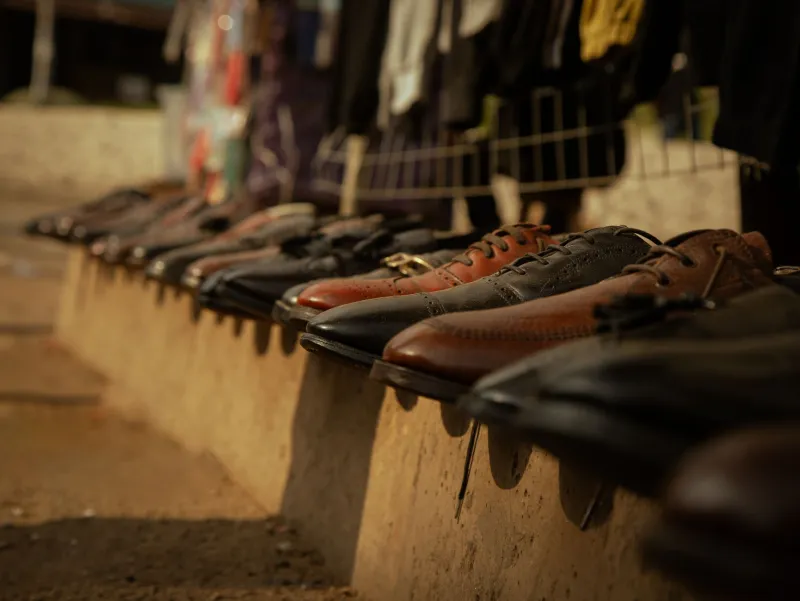
With wear, everything changes. The leather flexes and softens along the creases specific to the wearer's gait. Polish applied over months builds up in the grain, creating depth rather than mere shine—a three-dimensional luminosity that no factory finish can approximate. Shell cordovan, derived from the fibrous flat muscle beneath a horse's hide, is particularly celebrated for this quality. Cordwainers and their devoted customers speak of it almost reverently: the way it resists creasing, then develops subtle rolls; the way its surface, polished over years, begins to glow from within rather than merely reflect light from without.
A pair of well-maintained shell cordovan shoes at ten years of age is categorically more beautiful than the same pair at ten days. That is not sentiment. It is material reality.
Cloth That Conforms
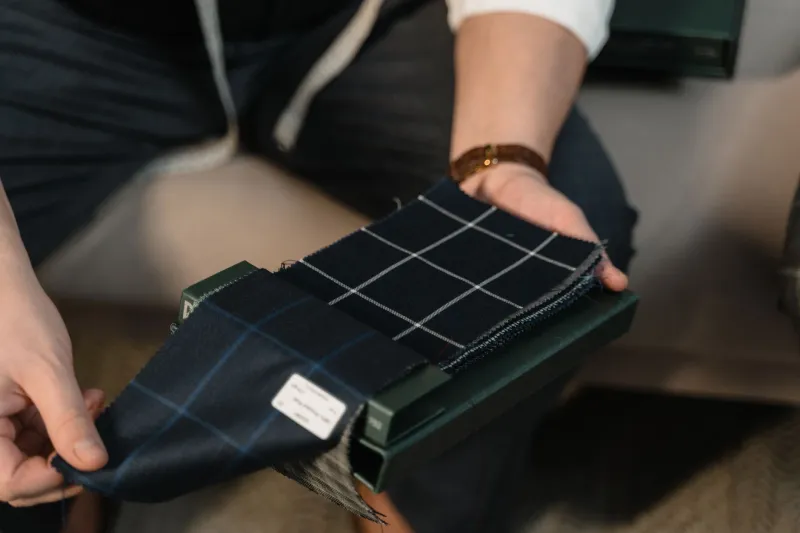
Suit cloth tells a similar story, though by different means. The finest woolen fabrics—high-count Super 120s, robust fresco weaves, the dense worsteds favored by English tailors—possess an inherent memory. In the early months of ownership, a bespoke or well-constructed suit still carries something of the cutter's vision. Over time, it begins to carry the wearer's as well.
The back of a well-worn suit jacket develops subtle shaping along the shoulder blades. The seat of the trousers conforms to the wearer's posture. Elbow areas soften with use, developing a supple quality that new cloth simply does not possess. None of this happens through neglect; it requires proper pressing, occasional steaming, and rotation with other garments to allow the fibers to recover between wearings. But when managed attentively, the result is a garment that fits not merely the body but the life.
Heavier cloths tend to age with particular grace. A substantial tweed jacket, worn through autumns and winters over many years, develops a kind of compressed density—a solidity of drape that lighter fabrics never achieve. The nap settles. The colors, initially perhaps a touch raw, mature into something richer and more complex. This is the tailoring equivalent of a wine finding its stride.
The American Context
In the United States, the culture of wearing things well over time has deep roots, even if contemporary consumer habits sometimes obscure them. The Ivy League tradition of wearing the same Harris Tweed jacket for fifteen or twenty years—not out of economy but out of genuine appreciation for what it became—reflects an understanding of dressed life as cumulative rather than episodic.
American workwear, too, has always understood this principle intuitively. The raw denim tradition, which demands months of wear before the first wash, is fundamentally a practice in cultivating patina. The fades and honeycombs that develop along stress points are records of the wearer's specific life—the tools carried, the postures held, the miles walked. Translated into the register of luxury menswear, the same logic applies: the garment becomes, over time, a wearable autobiography.
Tending What You Own
None of this happens passively. Patina of the finest kind requires stewardship—an active, considered relationship with the objects in one's care. Leather must be cleaned and conditioned on a schedule suited to its use. Shoes require cedar trees to maintain their shape between wearings. Suits should be brushed after each use to remove surface particulate that would otherwise degrade the fibers over time. Knitwear needs folding rather than hanging, and occasional airing to release moisture.
These are not burdensome rituals. They are, rather, the practices that transform ownership into custodianship—that shift the relationship between a man and his wardrobe from transactional to something more like partnership. The garments, tended well, give more of themselves. The wearer, in turn, develops a literacy of materials and construction that sharpens his eye and deepens his appreciation.
The Investment Reframed
The economic argument for quality is often made in terms of cost-per-wear—a useful metric, but perhaps an insufficiently imaginative one. The more compelling case for acquiring fewer, better things is not merely financial. It is experiential. A garment that improves with age offers something that no fast-fashion equivalent can: a relationship that deepens rather than diminishes, an object that becomes more itself the more it is worn.
This is the patina principle, simply stated: the finest menswear is not a product consumed but a material cultivated. It asks something of its owner—attention, care, patience—and in return offers something that cannot be bought new at any price. It offers time, made visible. And in that visibility, a particular kind of elegance that is, by its very nature, impossible to fake.