Patience as Luxury: The Case for Acquiring Less and Choosing Better
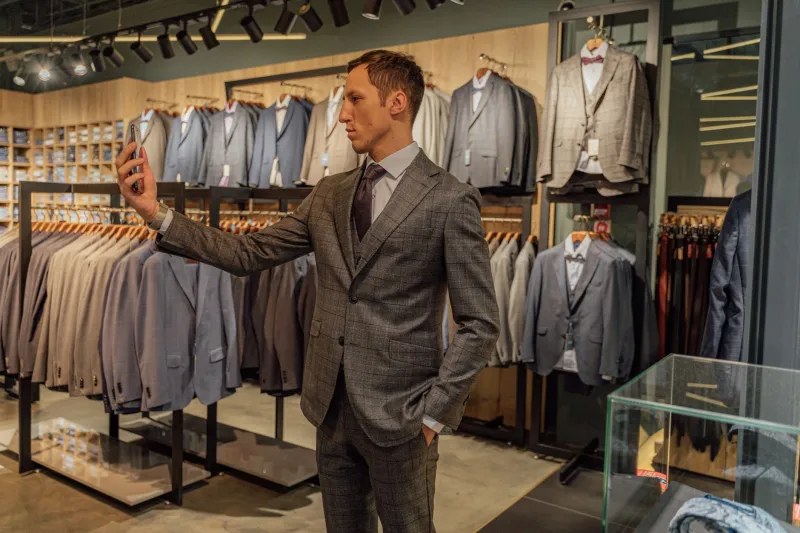
There is a particular kind of man who enters a fine clothier and leaves empty-handed. Not because nothing appealed to him, but because nothing was ready to appeal to him yet. He is waiting on a coat he ordered four months ago. He has been thinking about a particular pair of shoes for the better part of a year. He is, by every commercial measure, a difficult customer—and by every aesthetic measure, the ideal one.
This is not asceticism for its own sake. It is a philosophy of acquisition rooted in something the fashion industry has spent decades trying to suppress: the understanding that a wardrobe of genuine distinction cannot be assembled in a single season, or even several. It is built the way a library is built—title by title, year by year, each addition chosen with deliberate care and allowed to settle into the whole before the next arrives.
The Tyranny of the Seasonal Calendar
The modern fashion cycle operates on a logic of perpetual urgency. New collections arrive before the previous ones have been properly worn. Trend reports declare certain silhouettes essential, then obsolete, within the span of a calendar quarter. The implicit message is that a wardrobe is never complete—that incompleteness, in fact, is the point, because completeness would cease to generate consumption.
For men who dress with genuine intentionality, this rhythm is not merely unappealing. It is actively corrosive. The man who buys a jacket because it appeared in September's editorial and discards it by the following spring has not built a wardrobe. He has rented one. The garments he accumulates carry no personal history, no evidence of considered selection, no relationship to who he actually is. They are placeholders, not possessions.
The alternative is not indifference to beauty or craft. It is the refusal to let someone else's schedule determine when and what one acquires.
The True Cost of Quality, Reconsidered
When men discuss the cost of luxury menswear, the conversation tends to focus on price tags. This is understandable but incomplete. A suit from a distinguished American or English house may carry a price that gives pause—but that figure, examined honestly, often represents extraordinary value when measured against the decades of wear it will provide, the craftsmanship embedded in its construction, and the simple fact that it will not need replacing.
The more instructive calculation is the cost per wearing—a metric that tends to invert conventional assumptions about what constitutes extravagance. The moderately priced suit purchased impulsively and worn a dozen times before it pills, loses its shape, or simply no longer feels right costs far more, by this measure, than the considered purchase that becomes a cornerstone of one's wardrobe for twenty years.
But there is another cost that rarely enters these discussions: the psychological cost of accumulation without intention. A closet crowded with pieces that were each, individually, reasonable decisions but that collectively form no coherent whole is a source of quiet friction every morning. It demands decisions without offering clarity. The edited wardrobe—fewer pieces, each chosen with genuine care—removes that friction entirely.
Waiting as Refinement
The practice of waiting between purchases is not a discipline imposed from outside. For men who have arrived at it, it feels more like a natural consequence of understanding what they actually want.
Consider the process: a man notices a particular style of overcoat—perhaps a camel-hair model with a clean, unadorned collar—and finds it compelling. He does not immediately buy it. He notes the observation and returns to his life. Weeks pass. He still thinks about the coat. He begins to consider where it would be worn, what it would replace, whether it completes something in his wardrobe or merely adds to it. More weeks pass. He examines the construction of several examples, discusses the cloth with a knowledgeable salesperson, and perhaps visits a tailor. By the time the purchase is made—if it is made—he knows with certainty that it belongs.
This process sounds laborious only to someone accustomed to impulsive acquisition. To the man who practices it, the waiting is not a delay. It is part of the pleasure. The anticipation of a well-chosen piece is itself a form of enjoyment, and the arrival of something genuinely right carries a satisfaction that no impulse purchase can replicate.
The Aesthetic Coherence That Follows
There is a practical dividend to this approach that extends beyond individual purchases. When a man acquires slowly and deliberately, his wardrobe develops a coherence that reflects his actual aesthetic sensibility rather than the aggregate of whatever seemed appealing across a succession of seasons.
This coherence is immediately legible to anyone who pays attention to such things. The man whose clothes represent a single, sustained point of view—in color, in silhouette, in the weight and texture of his fabrics—communicates something that no amount of expensive individual pieces can manufacture on their own. He communicates that he knows who he is. That is, ultimately, what every element of a refined wardrobe is meant to express.
The alternative—a closet that reflects every trend of the past five years, a rotating cast of styles that never quite add up—communicates something quite different, regardless of the quality of any individual piece. It suggests a man still searching, still deferring to external authority on questions he has not yet resolved for himself.
Scarcity as Signature
There is a certain irony in the fact that the most financially successful men are often the least acquisitive dressers. Those who could purchase anything tend to purchase very little—and very well. This is not coincidence. The capacity to wait, to evaluate, to decline, is itself a form of sophistication that correlates with broader habits of mind.
In American culture, where abundance is often treated as evidence of success, this restraint can read as unusual. But within the narrower world of men who genuinely care about dress, it is recognized immediately for what it is: not parsimony, but precision. The man with eight exceptional pieces understands something the man with eighty merely adequate ones does not. That understanding is what Alfred LeRoy has always been about.
The weight of good taste, it turns out, is not heavy at all. It is the lightness that comes from knowing exactly what you need—and having the patience to wait until you find it.